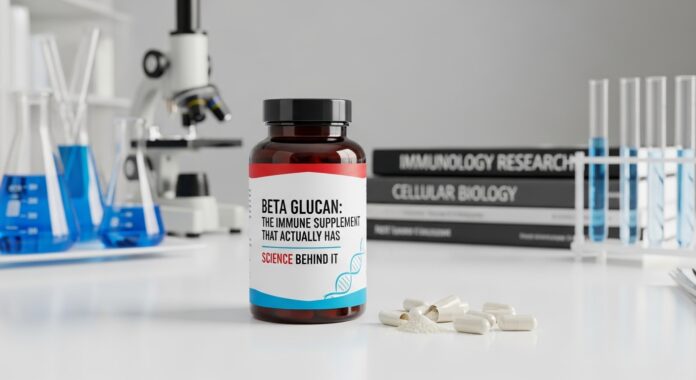
Most supplements sit somewhere between ‘probably fine’ and ‘complete waste of money’. Beta glucan is a bit different, and that’s not something you can say about many things you’ll find on a health shop shelf. There’s a genuine body of research behind it, which is more than can be said for half the powders and capsules currently trending on wellness TikTok.
Beta glucan is a type of soluble fibre found naturally in oats, barley, mushrooms, and certain yeasts. It’s been studied for decades, particularly in relation to immune function and cholesterol, and unlike some supplements that ride a wave of hype before quietly disappearing, this one has held its ground. The research isn’t perfect, but it exists, which puts beta glucan in a fairly small club.
What It Actually Does in the Body
The mechanism is more interesting than most people expect. Beta glucan works by binding to receptors on immune cells, essentially alerting them without triggering a full inflammatory response. Think of it less as a stimulant and more as a kind of priming agent. Your immune system doesn’t go into overdrive; it just becomes a bit more ready. The distinction matters because chronically over-stimulating the immune system isn’t something you want either.
The cholesterol angle is also well-documented. The European Food Safety Authority has approved a health claim for oat beta glucan and its role in maintaining normal blood cholesterol levels, which, in the world of supplement regulation, is not a small thing. Getting a formal approved claim through EFSA is genuinely rigorous, and oat beta glucan managed it. That’s worth paying attention to.
Where things get murkier is around dosage and source. Beta glucan from oats behaves slightly differently to beta glucan derived from yeast, and the concentration varies enormously between products. This is why it’s not as simple as just buying whatever’s cheapest and assuming you’ll get the same results as the clinical studies.
Should You Actually Take It?
The honest answer is that it depends on why you’re interested. If you eat a genuinely varied diet rich in whole grains and you’re generally healthy, adding a supplement might not shift things much. But if your diet is patchy, you’re getting through winter feeling run-down every year, or you’ve been told your cholesterol needs some attention, there’s a reasonable case for looking at it properly.
A lot of people who start taking a beta glucan supplement do so off the back of feeling stuck in a cycle of colds and low energy. Whether that’s the beta glucan or other lifestyle changes they make at the same time is genuinely hard to separate, which is true of almost every supplement ever taken by anyone. The placebo effect is real and powerful, and the two things aren’t always easy to disentangle. That said, the underlying research gives you more reason for cautious optimism here than with most.
If you’re on any medication that affects the immune system, it’s worth checking with your GP before adding anything new. Beta glucan is generally considered safe, but ‘generally considered safe’ isn’t the same as ‘appropriate for everyone in every situation’.
How to Choose One That’s Worth Your Money
The supplement market in the UK is not especially well-regulated compared to prescription medicines, so the quality gap between products can be significant. Look for products that specify the source of beta glucan (yeast-derived tends to be higher potency for immune applications), list the actual milligram content clearly, and aren’t padded out with fillers you don’t recognise.
Dosage in most of the well-cited studies sits around 250mg to 500mg per day for immune support, though this varies. Products claiming dramatic results from tiny doses, or hiding behind proprietary blends that don’t disclose amounts, are worth skipping.
It’s also not something that works immediately, and if you’re taking it hoping to feel better by next Tuesday, you’ll probably be disappointed. These things tend to show up over weeks, not days, which is true of most genuinely effective nutritional interventions.
Beta glucan won’t fix a bad diet, a chaotic sleep pattern, or three years of chronic stress. But as one piece of a sensible approach to staying well, it’s got considerably more going for it than the average capsule on the shelf.